

Cart
0
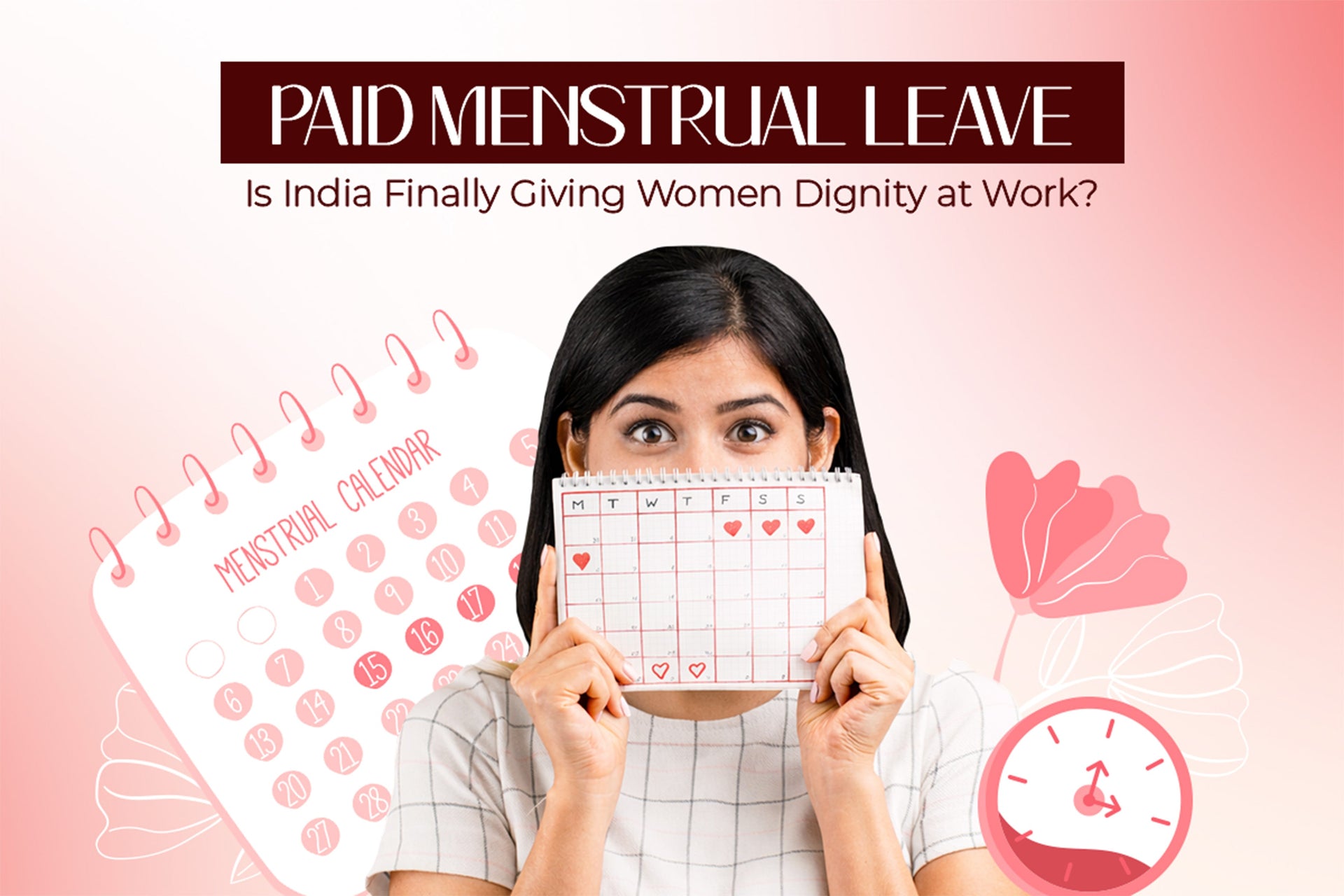

For years, menstruation existed in Indian workplaces as an unspoken reality. Women showed up regardless - through pain, fatigue, hormonal shifts - often with no vocabulary, policy, or institutional acknowledgment. Periods were managed discreetly, silently, and almost always alone.
That long-standing silence fractured recently, not because women suddenly began menstruating differently, but because India’s policy landscape finally caught up with lived experience.
The current national debate around paid menstrual leave was triggered when the Karnataka government formally announced a state-level paid menstrual leave policy, mandating one day of paid leave per month for women employees across government and private sectors. What had previously existed as scattered corporate initiatives or pilot policies suddenly became a matter of public law, judicial scrutiny, and national conversation.
Almost overnight, menstrual health shifted from being a “personal issue” to a workplace ethics question—one that India could no longer avoid.
⸻
Why This Debate Has Surfaced Now
India’s workforce has changed dramatically over the last decade. More women are entering formal employment, leadership roles, and decision-making positions. With this shift has come greater visibility of the physical and emotional realities women navigate while working full, demanding schedules.
Menstrual leave did not emerge because women asked for special treatment. It emerged because the existing definition of professionalism, one that assumes uniform productivity every day of the month was built without women’s bodies in mind.
The Karnataka decision forced a collective pause. Supporters saw it as long-overdue recognition of menstrual health as a workplace concern. Critics worried about stigma, misuse, or unintended bias. But regardless of where one stands, the debate itself marks a turning point: menstruation is no longer invisible in professional discourse.
In a country where menstruation has historically been wrapped in taboo, that visibility is significant.
⸻
Dignity at Work Is More Than a Day Off
Paid menstrual leave, at its core, is about dignity, not convenience. It acknowledges that menstruation can involve pain, fatigue, and reduced energy, and that expecting women to simply “push through” these experiences without support is neither equitable nor humane.
But dignity cannot exist in isolation. A policy may allow women to step away from work for a day, but what about the many days when they choose (or need) to be present?
Workplace dignity is also shaped by:
• how women feel sitting through meetings during their cycle
• whether they have access to comfortable menstrual hygiene
• whether discomfort becomes a constant mental negotiation
This is where the conversation must expand, from leave alone to everyday menstrual care at work.
⸻
The Quiet Reality of Menstrual Care in Professional Spaces
For many women, the hardest part of menstruating at work is not the pain itself, but the logistics. Long commutes. Limited breaks. Inadequate facilities. Products that prioritise absorption but ignore comfort or skin sensitivity.
These realities rarely feature in policy debates, yet they shape women’s daily experiences far more consistently than leave policies ever will.
As conversations around paid menstrual leave grow louder, they reveal something deeper: women are no longer willing to separate bodily care from professional life. Comfort is no longer seen as indulgence; it is recognised as a prerequisite for focus, confidence, and sustained performance.
⸻
A Soft Introduction, Rooted in This Moment
It is within this shifting landscape that The Vagine Story is quietly introducing VAGINÉ Ultra Comfort Sanitary Pads .
These ultra thin XL+ pads are built for the realities women actually face during their cycle, including long workdays, interrupted rest, and the need for uninterrupted comfort. With a breathable, cotton soft, skin friendly top layer to reduce irritation, a high absorbency core that locks moisture instantly, and a wider back with anti-leak wings for secure coverage even while sleeping, the product prioritises comfort without compromise.
There are no gimmicks here. Just real protection that supports softness where it is needed most and security where it matters. The philosophy is clear and intentional: you are not on your period. You are in your power cycle. This is menstrual care that honours the body’s natural rhythm rather than interrupting it, allowing women to rest deeply and rise beautifully, every cycle.
⸻
Reframing the Conversation Around Work and Cycles
What the current debate reveals is not simply a policy gap, but a cultural one. For decades, women adapted themselves to workplaces. Now, workplaces are being asked, perhaps for the first time, to adapt to women.
Paid menstrual leave is one expression of that adaptation. Thoughtful menstrual hygiene is another. Together, they suggest a future where productivity is no longer measured by denial of the body, but by alignment with it.
India’s conversation around menstrual leave is still unfolding. Policies will evolve. Critiques will continue. But the direction is clear: menstrual health is finally being recognised as a legitimate workplace concern.
⸻
The Editorial Takeaway
Dignity at work is not granted by a single policy decision. It is built slowly, through language, care, infrastructure, and everyday consideration.
Paid menstrual leave asks an important question: Can workplaces acknowledge women’s biology without penalty?
Menstrual care asks an equally important one: Can women move through their workdays without discomfort, shame, or silence?
The fact that India is asking these questions now is not accidental. It reflects a workforce that is changing, a culture that is listening, and women who are no longer willing to treat their bodies as inconvenient.
That, perhaps, is the most meaningful shift of all.


